Bilhah’s Story
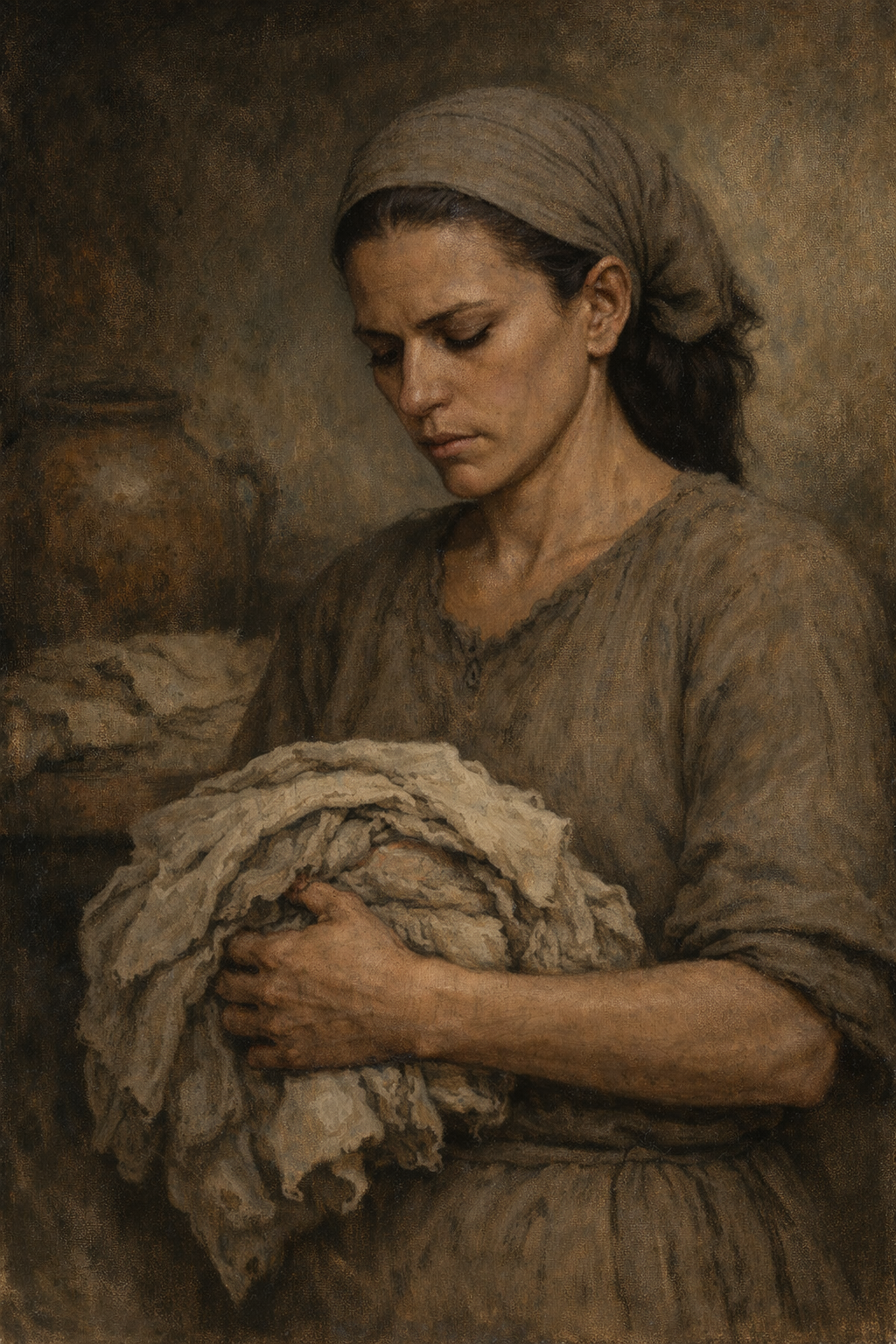
Bilhah enters Scripture identified by her position. She is the servant of Rachel, the younger daughter of Laban, a herdsman and head of the household in Paddan-aram, and the uncle of Jacob. Bilhah belongs to Rachel’s household, given to her by Laban, and her life is shaped from the beginning by service and dependency rather than choice.
When Jacob, the son of Isaac, marries Rachel and her sister Leah, Bilhah becomes part of a divided household. Leah bears children easily; Rachel does not. As the tension grows, Bilhah is brought into the conflict. Rachel speaks to Jacob and says, “Here is my servant Bilhah; go in to her, so that she may give birth on my behalf, that even I may have children through her.” (Genesis 30:3) Bilhah is not asked. Her body is offered as a solution to another woman’s loss.
Rachel gives Bilhah to Jacob as a concubine, and Scripture records it without explanation: “So she gave him Bilhah her servant as a wife, and Jacob went in to her.” (Genesis 30:4) Bilhah conceives and bears a son. Rachel names him Dan, saying, “God has judged me, and has also heard my voice and given me a son.” (Genesis 30:6) Bilhah carries the pregnancy and gives birth, but the child’s meaning is claimed by someone else.
Bilhah conceives again and bears a second son. Rachel names him Naphtali, saying, “With mighty wrestlings I have wrestled with my sister and have prevailed.” (Genesis 30:8) Through Bilhah, Jacob gains two sons. Bilhah gains no recorded voice. Her motherhood is real, but her authority over it is not.
Years later, as Jacob prepares to meet his brother Esau, the family is arranged for exposure and protection. Scripture states that Jacob placed “the servants with their children in front,” followed by Leah and her children, and finally Rachel and Joseph behind them. (Genesis 33:1–2) Bilhah stands at the front with her sons, positioned according to status, not safety.
After Rachel’s death, Bilhah is violated. Reuben, Jacob’s firstborn son by Leah, “went and lay with Bilhah his father’s concubine.” (Genesis 35:22) Scripture records the act and moves on. Bilhah’s response is not recorded. The silence is complete.
The violation is named later, not for Bilhah’s sake, but in judgment against Reuben. As Jacob speaks over his sons near death, he says, “You went up to your father’s bed; then you defiled it.” (Genesis 49:4) The wrong is acknowledged. Bilhah is not addressed. Later, however, Scripture returns to the event with judgment. As Jacob speaks over his sons before his death, he addresses Reuben directly, saying, “Unstable as water, you shall not have preeminence, because you went up to your father’s bed; then you defiled it.” (Genesis 49:4) In Christian teaching, this passage has often been used to explain Reuben’s loss of inheritance and leadership, while Bilhah herself remains unnamed and unaddressed, mirroring the silence of the earlier text.
Bilhah’s sons are counted when Jacob’s household is listed as it enters Egypt. Dan and Naphtali are named among the tribes of Israel. (Genesis 46:25) Bilhah herself is not mentioned again.
Scripture gives Bilhah no speech and no resolution. It shows a woman used to secure another’s legacy, exposed within a household hierarchy, and harmed without redress. Her life continues only through her sons. That continuation is the only outcome the text records.
Who Would She Be Today?
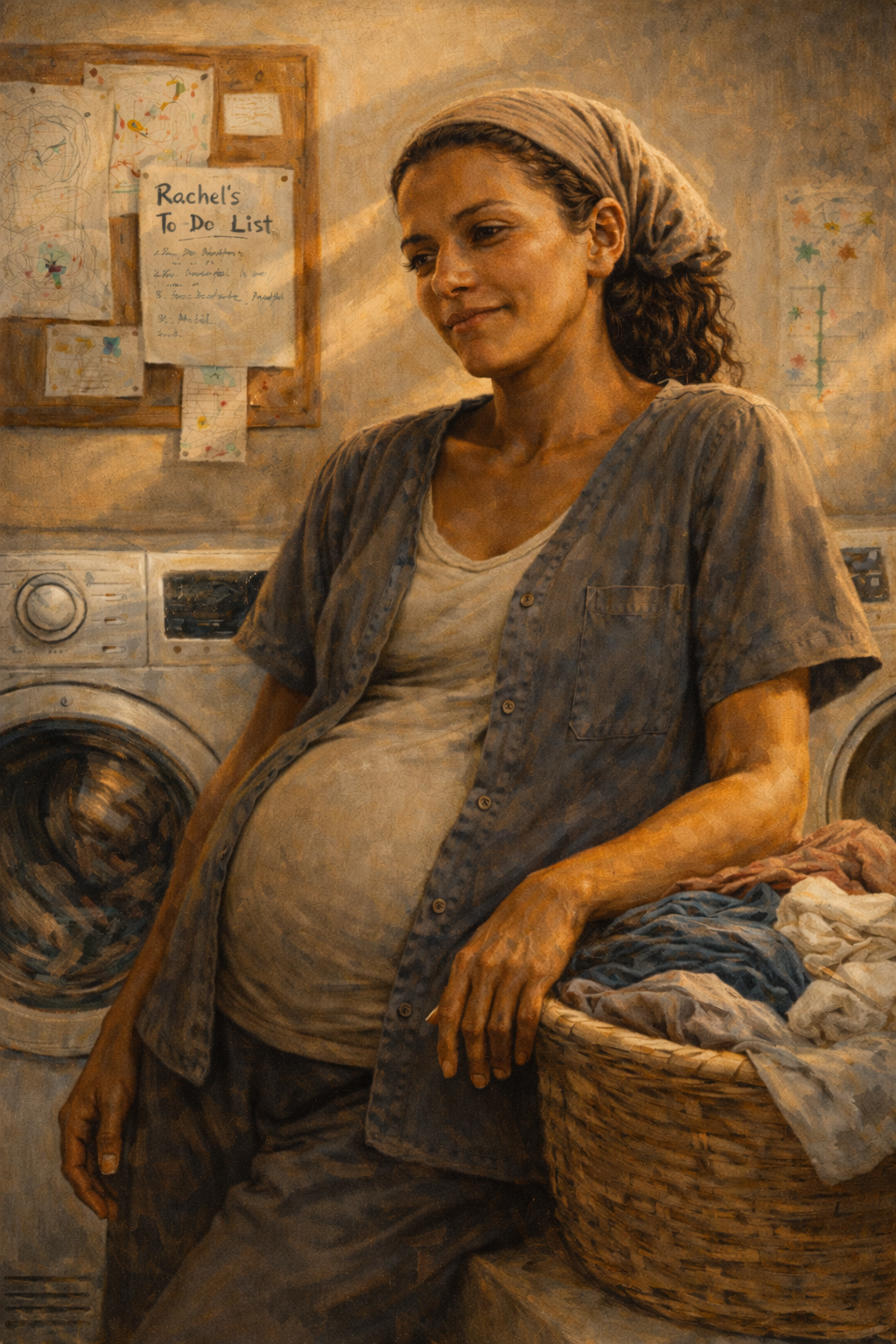
If Bilhah lived today, she’d probably work in someone else’s home — the kind of job where you keep everything running but rarely get credit for it. She’d be good at what she does, trusted with chores, schedules, and kids, spending a lot of her time folding laundry, cleaning up messes, and quietly checking things off someone else’s to-do list. She might be far from her own family, which is part of why she stays so involved with this one, and on quieter evenings or weekends she’d catch up with friends or relatives, trying to hold on to a sense of life that belongs just to her.
At some point, she’d be asked to become a surrogate — practical about it at first, seeing it as a way to help and earn money — only to realize later how tangled everything becomes when work, family, and emotions overlap. She’d learn what it’s like to be essential but overlooked, close to people without really being included. Still, she wouldn’t see herself as tragic. She’d take pride in being capable, steady, and dependable, finding small moments of peace in routine and familiarity, and ending most days knowing she carried more than most people ever noticed — and that counts for something.
Where Bilhah Appears in Scripture Inspiration
Genesis 29:29
Bilhah is named as the servant given by Laban to his daughter Rachel.
Genesis 30:3
Bilhah is given by Rachel to Jacob so that Rachel may have children through her; Bilhah does not speak.
Genesis 30:4
Bilhah is given to Jacob as a concubine; Jacob goes in to her.
Genesis 30:5–6
Bilhah conceives and gives birth to a son; Rachel names him Dan and speaks.
Genesis 30:7–8
Bilhah conceives again and gives birth to a second son; Rachel names him Naphtali and speaks.
Genesis 33:1–2
Bilhah appears with her children when Jacob arranges his family before meeting Esau; she is placed with the servants and their children in front.
Genesis 35:22
Bilhah is involved in an incident where Reuben, Jacob’s firstborn, lies with her; Bilhah does not speak.
Genesis 46:25
Bilhah is referenced in the genealogy of Jacob’s household entering Egypt; Dan and Naphtali are listed as her sons.
Genesis 49:4
Bilhah is indirectly referenced when Jacob condemns Reuben for defiling his father’s bed.
Legacy
Within Christian tradition, Bilhah has often been treated as a background figure, mentioned only in passing as part of the larger story of Jacob’s family. Her role is frequently reduced to a narrative function — a means by which tribes are born — rather than engaged as the life of a woman shaped by power, vulnerability, and obligation. In sermons and teaching, her story has commonly been summarized rather than examined, leaving her largely invisible in reflection and application.
When Bilhah is discussed more directly, Christian interpretation has sometimes framed her involvement in childbearing as cooperative or willing, assuming consent or agency that the text itself does not state. These readings can move beyond Scripture by filling in silence with intention, rather than allowing the silence to speak for itself. The biblical text records her actions and experiences without commentary, and it does not describe her motivations or emotions, nor does it justify the structures that governed her life.
Bilhah’s later violation by Reuben has also been handled unevenly in Christian thought. Attention has often focused on Reuben’s sin and its consequences for his inheritance, while Bilhah herself remains unnamed in moral reflection, echoing the biblical pattern of judging the offense without restoring the harmed person. In this way, later interpretation has sometimes repeated the imbalance already present in the narrative.
In more recent Christian scholarship and teaching, Bilhah’s story is being re-examined with greater care. Readers are paying closer attention to the realities of servitude, concubinage, and women’s vulnerability in patriarchal households, and recognizing that Scripture reports these realities without endorsing them. Bilhah is increasingly understood not as a symbol or device, but as a woman whose life reveals the cost of family systems built on hierarchy and control.
Today, Bilhah’s legacy shapes Christian conversations about power, silence, and whose stories are heard. Her presence challenges readers to resist reading past unnamed suffering, and to acknowledge that faithfulness in Scripture is sometimes expressed not through choice or voice, but through endurance.
Reply