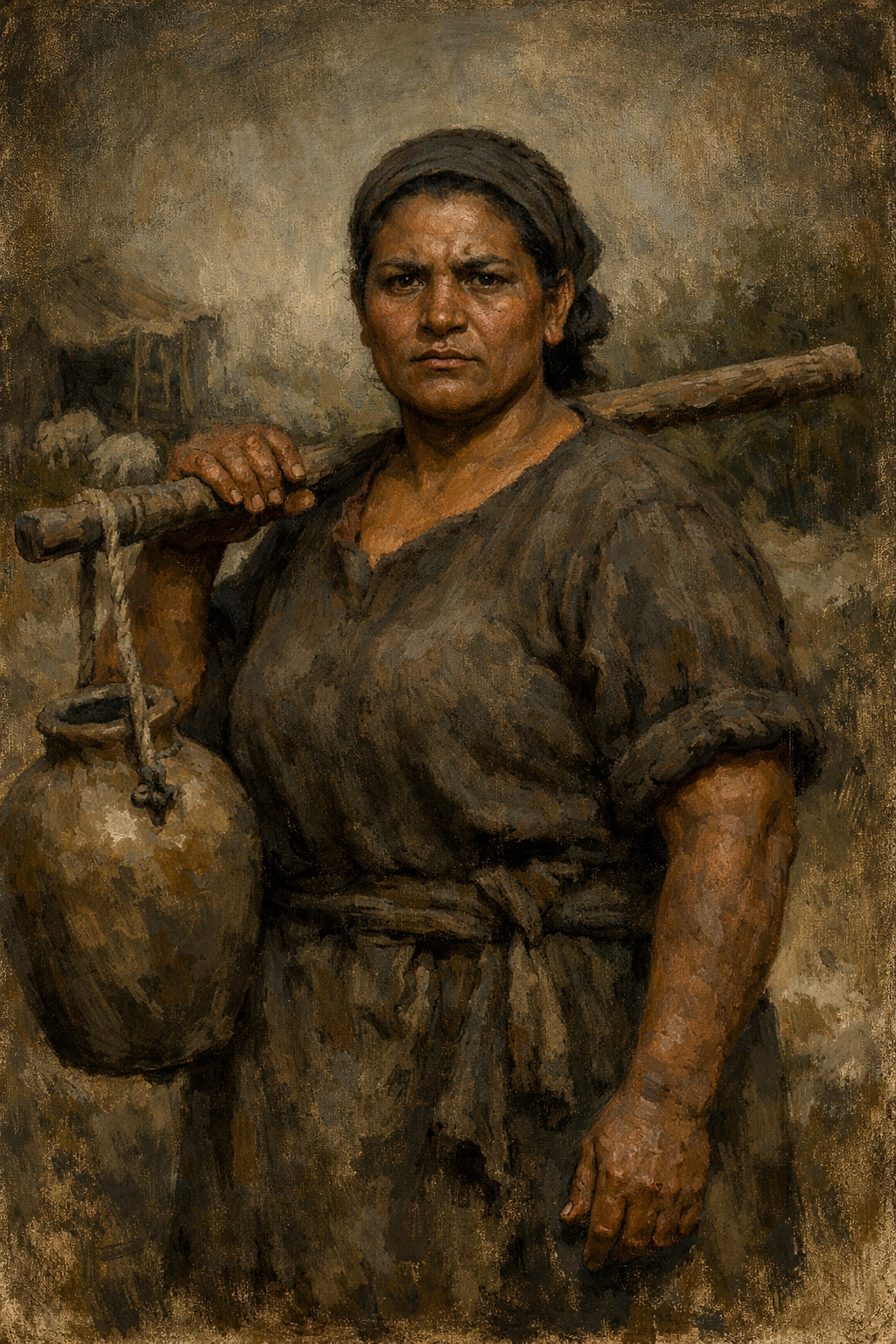
Zilpah’s Story
Zilpah enters Scripture identified by her position, not by her voice. She is introduced as the servant given by Laban to his daughter Leah. Laban is a herdsman of Paddan-aram, the brother of Rebekah and the uncle of Jacob, and Zilpah belongs to Leah’s household as part of the marriage arrangement (Genesis 29:24). From the beginning, her life is defined by service and by proximity to decisions made by others.
When Jacob, the son of Isaac and grandson of Abraham, marries Leah and her sister Rachel, Zilpah becomes part of a growing and divided household. Leah bears sons quickly at first, but then her childbearing stops. When she sees that she has ceased bearing children, Leah turns to Zilpah. Scripture records Leah’s action plainly: “She took Zilpah her servant and gave her to Jacob as a wife.” (Genesis 30:9) Zilpah is not consulted. Her body becomes the means by which Leah seeks to maintain standing and security within the family.
Zilpah conceives and bears a son. Leah names the child and says, “Good fortune has come!” and she calls his name Gad. (Genesis 30:11) Zilpah gives birth again, and Leah names the second son Asher, saying, “Happy am I! For women have called me happy.” (Genesis 30:13) Zilpah’s pregnancies and labor are real and costly, yet her experiences are interpreted and spoken through Leah’s voice. The children she bears belong legally and socially to Leah’s household.
Zilpah remains within Jacob’s family as the mother of Gad and Asher. Years later, when Jacob prepares to meet his estranged brother Esau, Scripture describes how the family is arranged. Jacob places “the servants with their children in front,” followed by Leah and her children, and finally Rachel and Joseph behind them. (Genesis 33:1–2) Zilpah stands with her sons at the front, positioned according to status rather than protection.
Unlike Bilhah, Scripture records no later act of violence against Zilpah. Her life continues without further narrative detail. She travels with the household as Jacob’s family grows and eventually moves toward Egypt. When Jacob’s household is listed as it enters Egypt, Zilpah is named as the mother of Gad and Asher, and her sons are counted among the family of Israel. (Genesis 46:18)
Zilpah’s story ends without recorded speech, conflict, or death. Scripture does not describe her thoughts, her consent, or her response to the life she is given. It shows her as a woman whose role is functional and whose contribution is lasting. Through her, two tribes of Israel are born. Her life is marked by obedience, endurance, and continuation, and the text leaves her where it places her — within the household, carrying responsibility without recognition, and shaping the future without being named in it.
Who Would shE bE today?
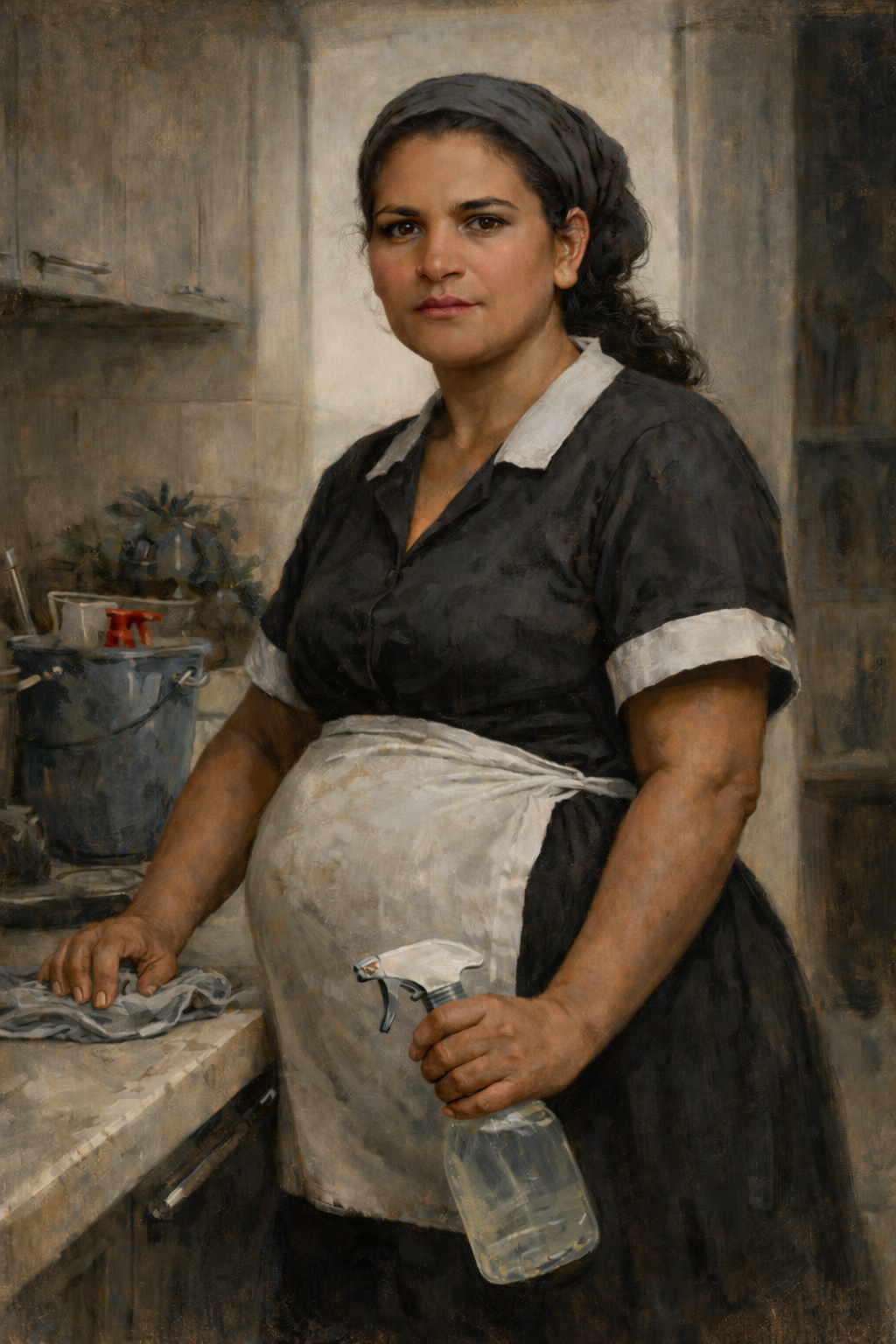
If Zilpah lived today, she’d likely work as a maid or domestic helper and stay with the same family for years. She’d learn their routines, raise their children alongside them, and quietly become the person who keeps everything from falling apart. She’d give that household her full energy and loyalty, not because it’s glamorous, but because that’s what steady people do when others rely on them.
Over time, she’d realize she belongs just enough to be needed, but not enough to be claimed. She’d be trusted, depended on, and still overlooked — present at every stage of the family’s life without ever fully sharing in it. She wouldn’t make a scene or demand recognition. She’d simply keep going, aware that she has built something lasting for others while her own place remains uncertain, and learning to live with that reality without losing her sense of self.
Legacy
Where Zilpah Appears in Scripture
Genesis 29:24
Zilpah is named as the servant given by Laban to his daughter Leah at the time of her marriage to Jacob.
Genesis 30:9
Leah gives Zilpah, her servant, to Jacob as a wife when Leah stops bearing children; Zilpah does not speak.
Genesis 30:10–11
Zilpah conceives and gives birth to a son; Leah names him Gad and speaks.
Genesis 30:12–13
Zilpah gives birth to a second son; Leah names him Asher and speaks.
Genesis 33:1–2
Zilpah appears with her children when Jacob arranges his family before meeting Esau; she is placed with the servants and their children in front.
Genesis 46:18
Zilpah is referenced in the genealogy of Jacob’s household entering Egypt; Gad and Asher are listed as her sons.
Legacy
Within Christian tradition, Zilpah has often been treated as one of the most invisible figures in Jacob’s household. She is usually mentioned only in lists or summaries, remembered primarily as the mother of two tribes rather than as a woman with a lived experience. In many teachings, her presence is absorbed into Leah’s story, and her own role is rarely considered apart from the children she bears.
When Zilpah’s story is addressed more directly, Christian interpretation has often assumed consent or willingness in her role as concubine, reading her silence as agreement. These assumptions go beyond what Scripture states. The biblical text records what happens to Zilpah without explaining her thoughts or motivations, and it does not present her actions as chosen or voluntary. Her silence in the narrative reflects her position within the household, not necessarily her inner life.
At the same time, Zilpah has been honored indirectly through her sons. Gad and Asher are counted among the tribes of Israel, receive blessings, and play a role in the formation of the nation. In Christian reflection, this has sometimes been used to emphasize God’s ability to work through overlooked people and ordinary circumstances. Yet this emphasis can risk moving too quickly to outcome and legacy, without lingering over the cost borne by the person herself.
In more recent Christian scholarship and teaching, Zilpah’s story is being read with greater care. Readers are paying closer attention to the realities of servitude, concubinage, and women’s lack of agency in patriarchal family systems, recognizing that Scripture describes these structures without endorsing them. Zilpah is increasingly understood not as a narrative footnote, but as a reminder that God’s purposes unfold within human systems that include inequality and silence.
Today, Zilpah’s legacy shapes Christian conversations about visibility, power, and faithfulness in unnoticed roles. Her story challenges readers to consider whose labor is counted, whose voice is absent, and how Scripture invites careful reading rather than quick moral conclusions.
Reply