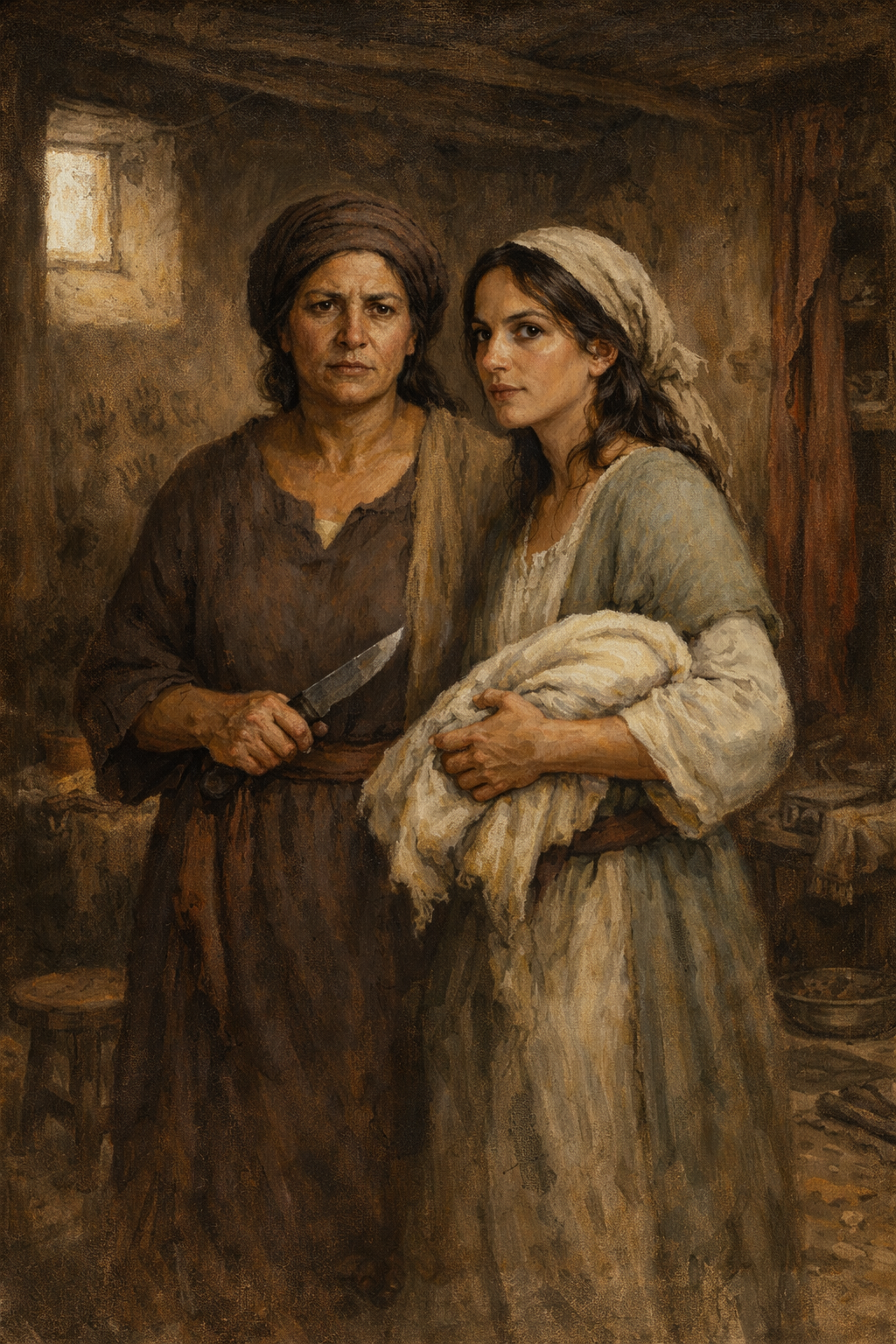
Shiphrah and Puah’s Story
Shiphrah and Puah are named as Hebrew midwives at a decisive moment in Israel’s history. Their work places them at the beginning of life, attending births among a people living under growing oppression in Egypt. As Israel multiplies, Pharaoh, ruler of Egypt, responds with fear and issues a direct command aimed at stopping that growth.
Pharaoh summons Shiphrah and Puah and orders them to kill Hebrew boys at birth, saying, “If it is a son, you shall kill him, but if it is a daughter, she shall live.” (Exodus 1:16) The command assigns responsibility to them personally. Their daily work is meant to become the means of state violence.
Shiphrah and Puah act decisively. Scripture states, “The midwives feared God and did not do as the king of Egypt commanded them, but let the male children live.” (Exodus 1:17) They continue delivering babies and protecting life. Their resistance is sustained, not momentary, and it directly undermines Pharaoh’s policy.
When Pharaoh calls them to account and asks, “Why have you done this, and let the male children live?” (Exodus 1:18), they answer together, “Because the Hebrew women are vigorous and give birth before the midwife comes to them.” (Exodus 1:19) Their response is purposeful. It deflects blame, preserves their ability to keep working, and shields the families they serve.
Scripture records the outcome clearly: “God dealt well with the midwives.” (Exodus 1:20) The people continue to increase. Then it adds a personal result: “Because the midwives feared God, he gave them families.” (Exodus 1:21) Their faithfulness shapes both the community and their own lives.
Shiphrah and Puah’s actions delay Pharaoh’s plan and protect a generation of children. Their work creates the conditions in which Israel’s deliverer will later be born. Scripture places them at the beginning of the Exodus story and names them because what they do matters. They choose obedience to God within their profession, and their courage alters the course of history.
Who WOuld they be Today?
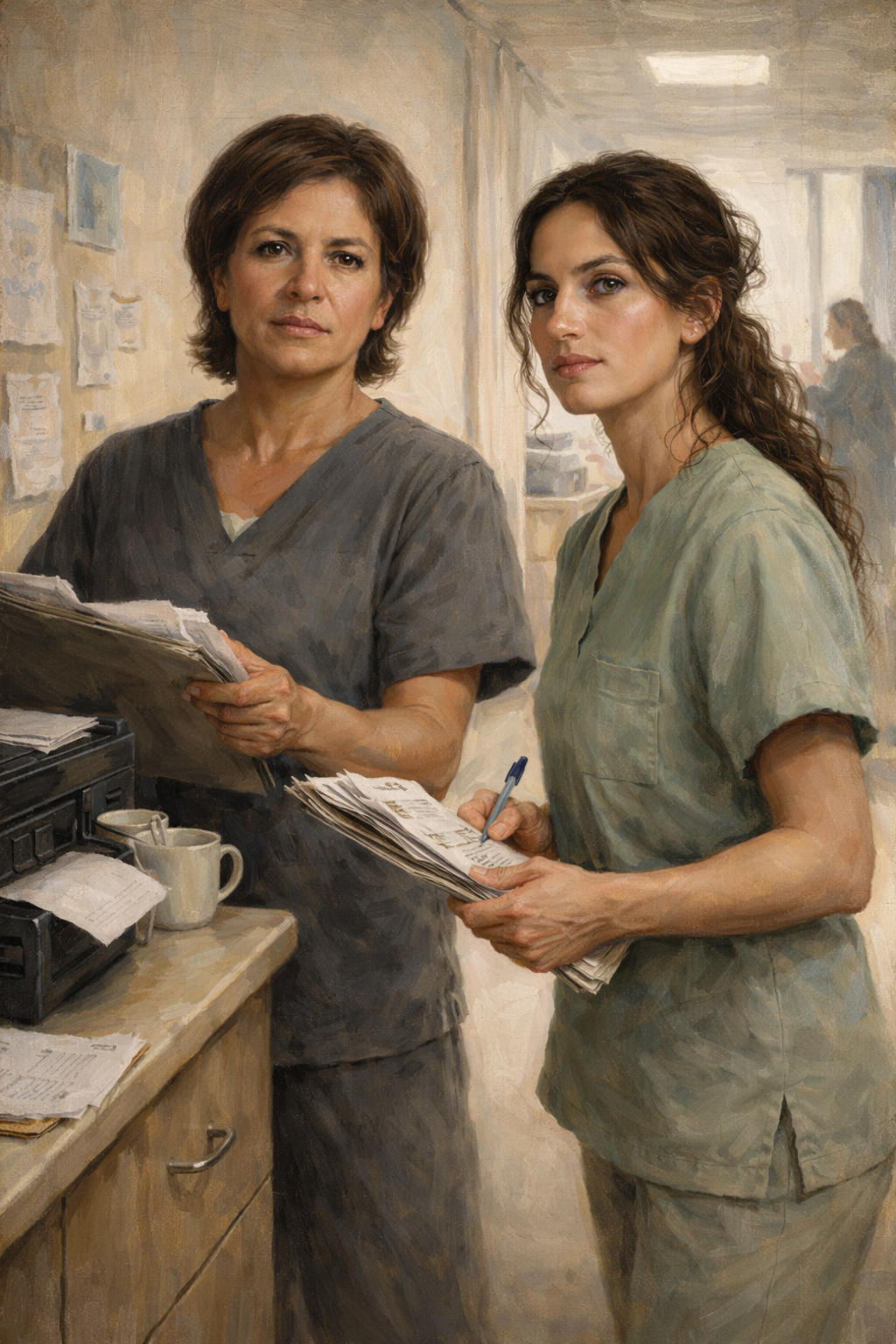
If Shiphrah and Puah lived today, they would work in a hospital, close to the places where decisions become real for real people. They would see patterns others learn to ignore — policies that look fine on paper but quietly harm those with the least power. Their work would give them access, responsibility, and insight, and that combination would make neutrality impossible. They would understand that care is not just about skill, but about judgment, and that sometimes the most important part of the job is knowing when something is wrong.
They would try to make things right — first carefully, then persistently. Sometimes that would mean protecting patients within the system, sometimes challenging it directly, and sometimes stepping away to build something better when reform is no longer possible. What would set them apart is not defiance for its own sake, but clarity. When asked to participate in harm, they would refuse. When told that obedience matters more than conscience, they would choose conscience anyway. Shiphrah and Puah would be women whose faith shows up as resolve — steady, costly, and life-giving — reminding us that history often turns not on grand speeches, but on people who decide that preserving life is worth the risk.
Where Shiphrah and Puah Appear in Scripture
Exodus 1:15
Shiphrah and Puah are named as the Hebrew midwives summoned by Pharaoh.
Exodus 1:16
Pharaoh gives Shiphrah and Puah direct instructions to kill Hebrew male infants at birth.
Exodus 1:17
Shiphrah and Puah fear God and do not carry out Pharaoh’s command; they allow the male children to live..
Exodus 1:18–19
Pharaoh questions Shiphrah and Puah; they speak in response, explaining why the children have lived.
Exodus 1:20
God deals well with the midwives; the people continue to multiply.
Exodus 1:21
Because Shiphrah and Puah fear God, He gives them families
Legacy
Within Christian tradition, Shiphrah and Puah have often been honored as early examples of faithful obedience, especially for their decision to fear God rather than submit to unjust authority. Their story is frequently taught as a clear moment where obedience to God and obedience to the state come into direct conflict, and where moral responsibility is exercised through ordinary work rather than public leadership.
At times, Christian interpretation has simplified their story, focusing almost exclusively on their courage while overlooking the sustained nature of their actions. Scripture shows that their resistance was not a single brave moment, but an ongoing practice carried out quietly over time. Some readings have also moved beyond the text by speculating about their motives or backgrounds, rather than staying with what Scripture actually records: their fear of God, their refusal to harm, and their wise response under pressure.
More careful readings in recent years have highlighted the significance of their profession. Shiphrah and Puah are not portrayed as rebels acting outside their roles, but as midwives who use their authority and skill to protect life. Christian scholars increasingly note that they are named at the opening of Exodus because their actions set the tone for the entire book — God’s deliverance begins with women who preserve life before any miracles or leaders appear.
Today, Shiphrah and Puah continue to shape Christian conversations about conscience, vocation, and resistance. Their legacy affirms that faithfulness is not limited to public platforms or dramatic acts, but can be exercised through steady, responsible work done with integrity. They remain a reminder that obedience to God often takes place in quiet decisions that carry lasting consequences for others.
Reply