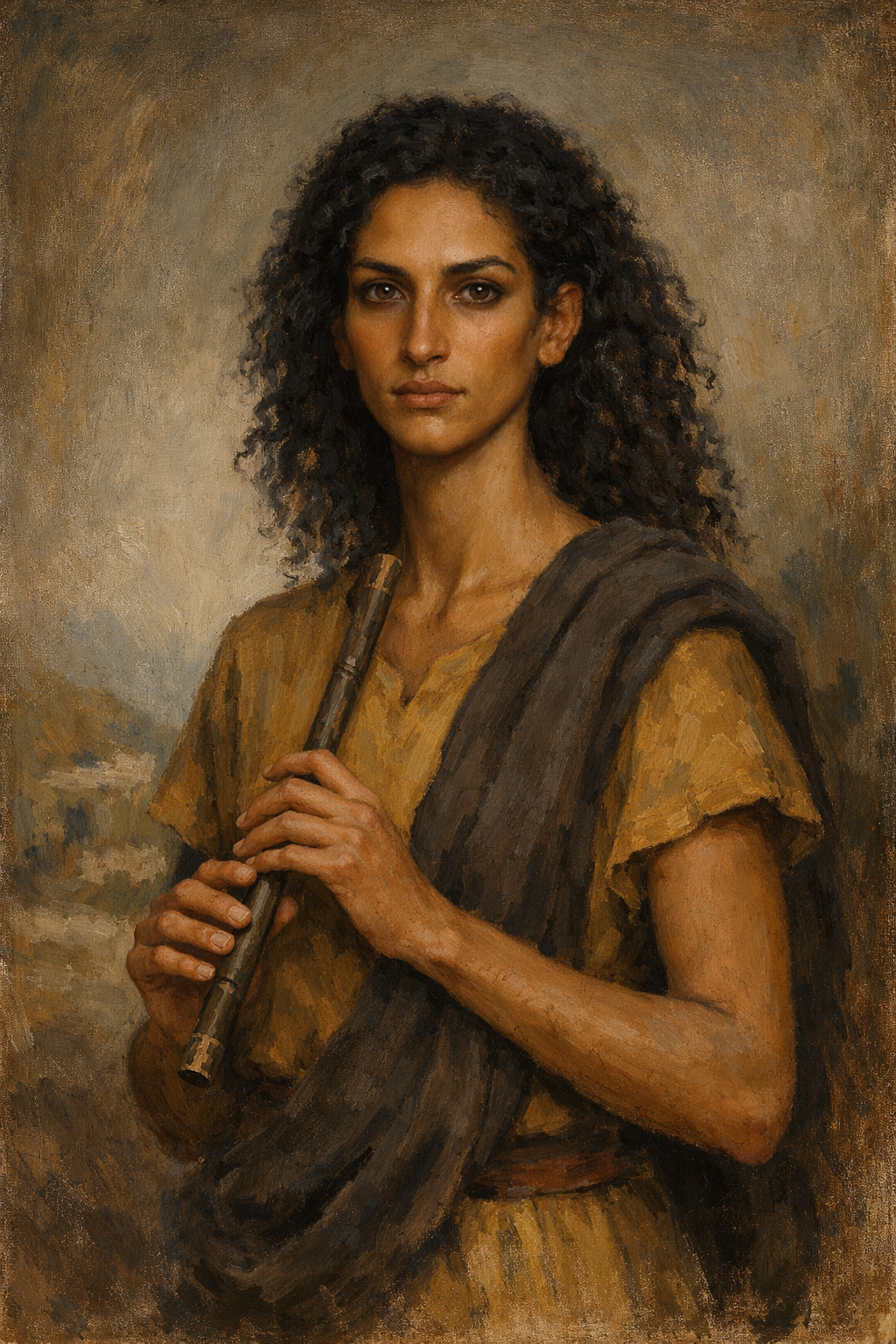
Naahma’s Story
Naamah appears in Genesis 4, in one of the earliest genealogies of the Bible, at a moment when Scripture is tracing how human life begins to take shape beyond the first family. She is born into the line of Cain, several generations after Adam and Eve, in a world already marked by both creativity and violence.
Her family is named with care. Scripture tells us that her father is Lamech, a descendant of Cain, and her mother is Zillah. Naamah is introduced in a single, deliberate line:
“Zillah also bore Tubal-cain; he was the forger of all instruments of bronze and iron. The sister of Tubal-cain was Naamah” (Genesis 4:22).
That sentence is brief, but it is not accidental. In a genealogy where most women are unnamed, Naamah is identified by name and by relationship. She is not described by what she does, but she is remembered as part of a family shaping early human culture.
Naamah grows up in a household closely associated with innovation and power. Her brother Tubal-cain is known for working bronze and iron — skills that change how people build, farm, and fight. Through her family, Naamah is situated at the intersection of progress and consequence. The tools forged in her household can sustain life, but they can also amplify harm.
Later in the same chapter, Scripture gives us a glimpse into the environment Naamah lives in. Her father speaks directly to his wives, saying:
“Adah and Zillah, hear my voice; you wives of Lamech, listen to what I say.”
He goes on to boast,
“I have killed a man for wounding me… If Cain’s revenge is sevenfold, then Lamech’s is seventy-sevenfold” (Genesis 4:23–24).
Naamah is not addressed in this speech, but she is part of the household hearing it. Scripture places her in a family where technological skill and open violence exist side by side — where human capability is increasing, but restraint is not.
Naamah does not speak in Scripture. Her actions are not recorded. Her later life and death are not mentioned. But her name remains. She is preserved in the biblical record not as an afterthought, but as a named woman among brothers whose roles are detailed.
In the earliest chapters of Genesis, naming is never casual. To be named is to be remembered. Naamah stands as one of the first women whose presence is acknowledged without explanation or justification. Scripture does not tell us what she achieved or how she lived; it simply insists that she existed, that she belonged to this family, and that her name was worth recording.

If I imagine Naamah today, I see someone growing up in a family where her brothers’ work is named and celebrated, while her own presence is quieter. Scripture places her alongside brothers whose skills shape industries, and that would likely mean she is deeply familiar with the family’s work, even if she is not the one publicly recognised for it. She would understand how things function, where decisions are made, and what it takes to keep everything moving.
I picture her as the kind of girl who slips into her brother’s room and sits at the drum kit when no one is watching — not because she isn’t allowed to learn, but because the space was never really offered to her. She plays quietly, with skill and instinct, knowing the rhythm by heart. Naamah feels like someone who carries ability without permission, creativity without a platform, and presence without acknowledgement. Her strength would be in staying connected and capable, even when the world is not quite ready to name what she can do.
Where Naamah Appears in Scripture
Genesis 4:22
Naamah is named as the daughter of Zillah and the sister of Tubal-cain within the genealogy of Cain’s descendants.
Legacy
Within Christian tradition, Naamah has often been treated as a question rather than a character. Because Scripture names her but gives no description of her actions, later readers have sometimes tried to fill the silence — speculating about her role, her morality, or her importance in ways that go well beyond the text. In some traditions, this has led to exaggerated claims about her identity or influence; in others, she has been dismissed altogether as insignificant.
What is striking, though, is that Scripture itself does neither. It neither explains Naamah nor erases her. She is named alongside brothers whose achievements are detailed, which has led many Christian readers to notice the tension: why preserve her name if her role is not explained? Historically, that tension has been uncomfortable, especially in traditions that prefer clear lessons or exemplary behavior.
More recent Christian scholarship has returned to the text with greater restraint, recognising that naming itself is meaningful in Genesis. Naamah’s legacy, then, is not about what she is imagined to have done, but about what Scripture chose to remember. She represents the many women whose lives were woven into the foundations of human society without public recognition. Her presence continues to shape Christian conversations by reminding readers to pay attention to who is named, who is silent, and how much weight Scripture gives to remembrance itself — even when the details are left unresolved.
Reply