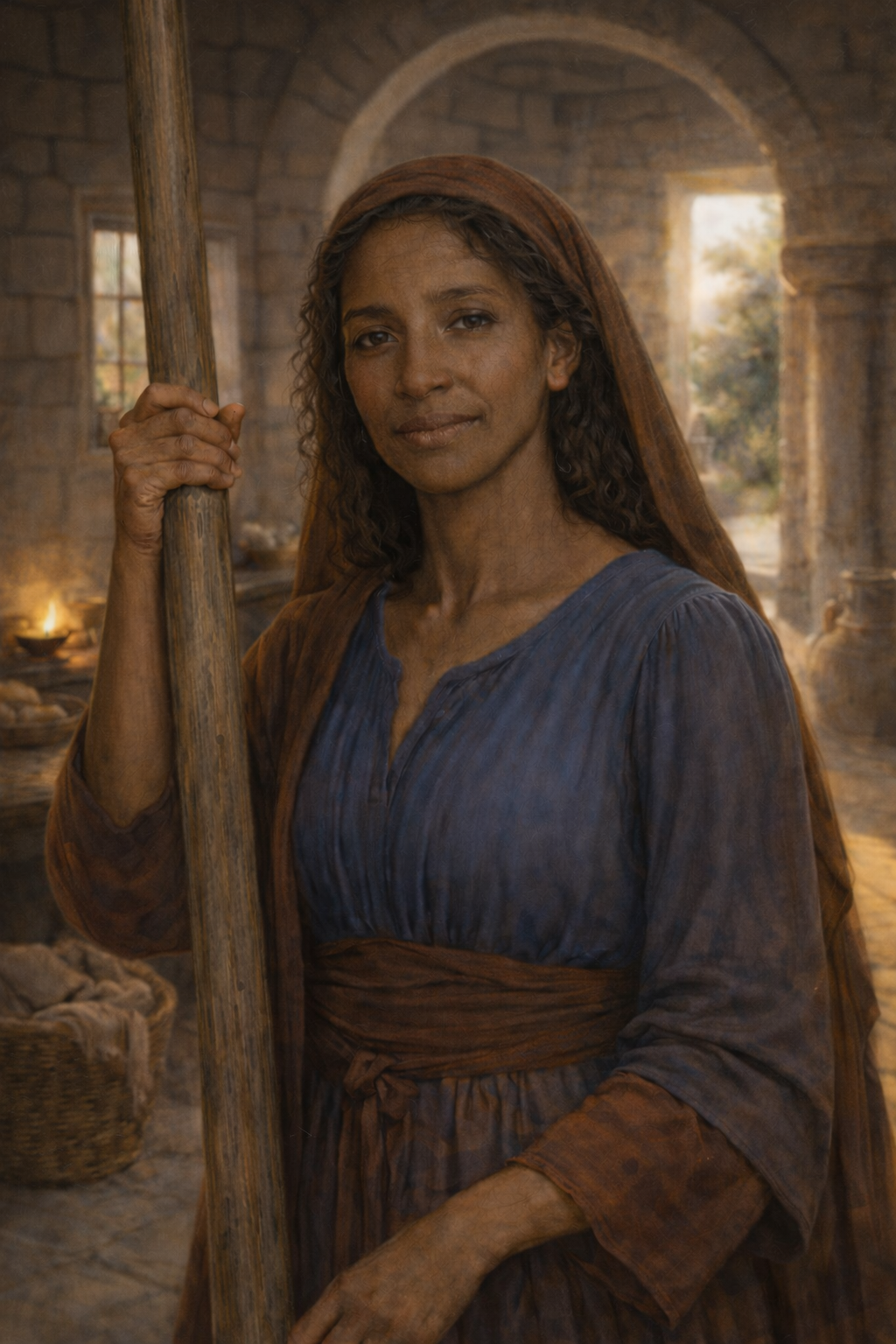
Keturah’s Story
Keturah enters the biblical story later in Abraham’s life, after long years marked by promise, waiting, loss, and fulfillment. Scripture introduces her plainly but deliberately, after Sarah’s death:
“Abraham took another wife, whose name was Keturah” (Genesis 25:1).
Nothing else is added to explain her origin, her age, or how the marriage came about. What Scripture does instead is place her clearly in the unfolding story — not as a footnote, but as a continuation.
Keturah becomes Abraham’s wife at a time when his household is already established and his legacy largely secured. Isaac, the son of promise, has been born. Sarah has died and been buried. Abraham is old, but his life is not finished. With Keturah, life continues.
Scripture records Keturah’s children carefully and in order:
“She bore him Zimran, Jokshan, Medan, Midian, Ishbak, and Shuah” (Genesis 25:2).
This is not a rushed list. It is a naming. Keturah is remembered as a mother whose sons will become founders of peoples and regions known throughout the biblical world.
The genealogy continues, tracing the next generation through her sons. Jokshan’s children are named. Midian’s descendants are listed (Genesis 25:3–4). These names will later reappear across Scripture, associated with trade routes, deserts, settlements, and nations. Through Keturah, Abraham’s influence spreads far beyond the line of promise into the wider world.
Scripture then makes an important distinction. While Abraham provides for all his sons, it states clearly:
“Abraham gave all he had to Isaac. But to the sons of his concubines Abraham gave gifts, and while he was still living he sent them away from his son Isaac, eastward to the east country” (Genesis 25:5–6).
This moment names reality without drama. Isaac remains the heir of the covenant. Keturah’s sons are not erased, but they are sent out — provided for, released, and positioned to form lives and peoples of their own.
Keturah does not speak in Scripture. Her inner life is not described. But her role is unmistakable. She is a woman through whom expansion happens. She gives birth to sons who do not carry the covenant line, yet who shape the surrounding world in lasting ways.
After this, the text moves on. Scripture records Abraham’s death soon after (Genesis 25:7–10). Keturah’s later life and death are not described. What remains is her lineage — names that ripple outward across maps and generations.
Keturah’s story is not about promise fulfilled after waiting. It is about fruitfulness after loss, and continuation after grief. She enters the narrative when much has already been decided, yet she is not redundant. Through her, life multiplies. The story of Abraham does not narrow — it broadens.
Keturah stands as a woman whose impact is measured not by inheritance, but by expansion. Scripture remembers her not for what she lacked or was denied, but for what came through her — nations, movement, and the spread of human life beyond a single line.
This part of Keturah’s story often raises questions, and understandably so.
Genesis is clear that Abraham marries Keturah after Sarah’s death: “Abraham took another wife, whose name was Keturah” (Genesis 25:1). She is explicitly called a wife at the point of marriage. Yet only a few verses later, when inheritance is discussed, the text refers to “the sons of his concubines” (Genesis 25:6), a category that includes Keturah’s children. That shift in language can feel confusing or even diminishing, but it reflects social and legal realities rather than a comment on her worth.
In Abraham’s world, inheritance was not primarily about affection or marital legitimacy — it was about covenant, lineage, and legal priority. Isaac had already been designated as the sole heir of the covenant promise (Genesis 17:19; 21:12). That decision shaped everything that followed. Any children born outside that covenant line, regardless of their mother’s status as wife, were placed in a different legal category when it came to inheritance.
Calling Keturah a concubine in this context does not mean she was unmarried, exploited, or secondary in relationship. It signals that her sons were not heirs of the covenant estate, not that she herself lacked dignity or legitimacy. The text immediately clarifies Abraham’s responsibility toward them: “Abraham gave gifts to the sons of his concubines, and while he was still living he sent them away… eastward” (Genesis 25:6). This was not abandonment. It was provision paired with separation, ensuring Isaac’s inheritance remained intact while Keturah’s sons were equipped to establish lives of their own.
The inheritance split, then, is about distinction, not rejection. Isaac receives the land, the promise, and the covenant role. Keturah’s sons receive resources, independence, and the freedom to become founders of peoples beyond that central line. Scripture treats both outcomes as meaningful, even if they are not equal in function.
Understanding this helps us read Keturah’s story without flattening it. She is not downgraded after marriage, and she is not erased from Abraham’s legacy. She stands at the point where the story widens — where one line continues inward, and many others move outward — and Scripture names her accordingly.
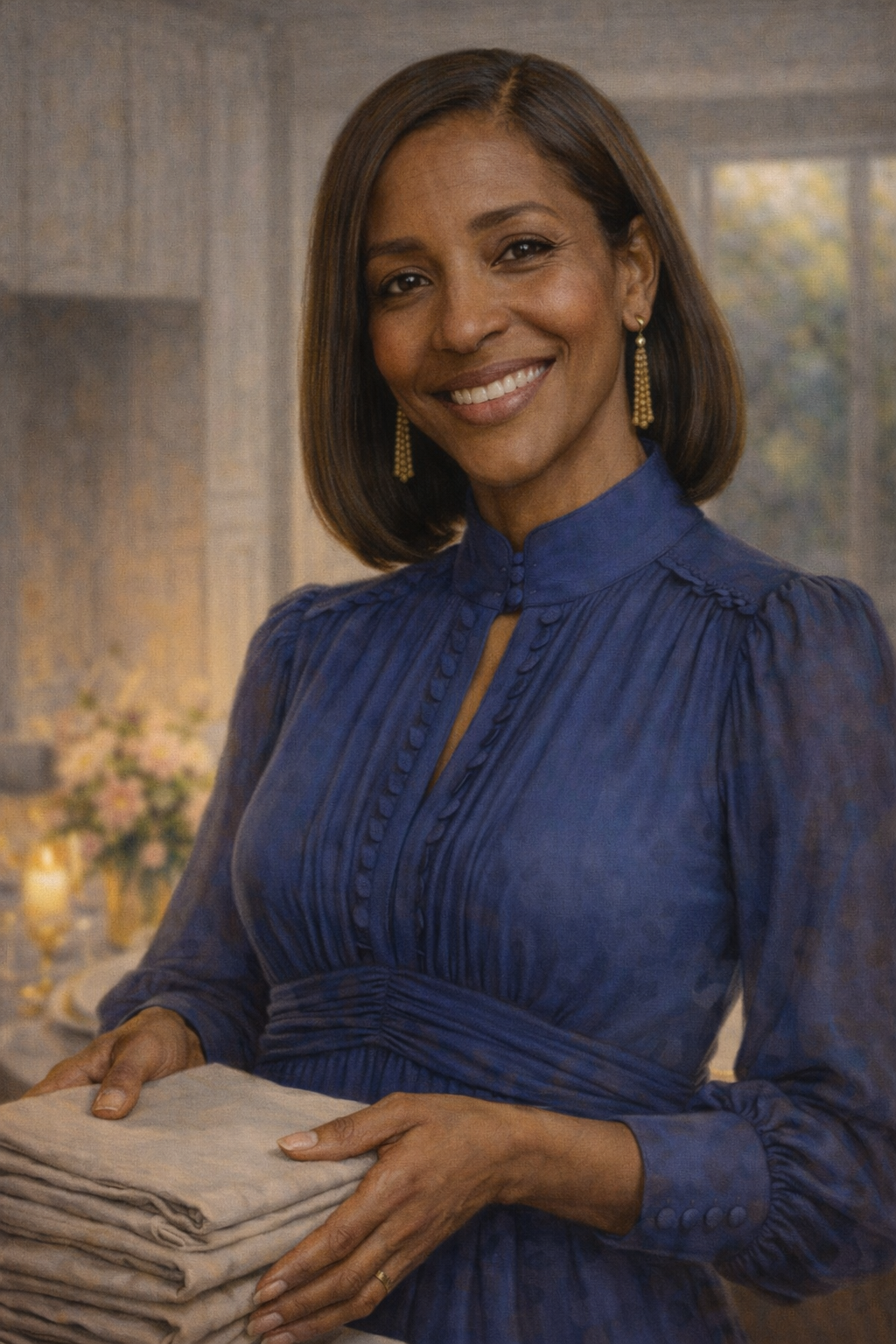
When I imagine Keturah today, I see a woman who enters a complex family situation with competence rather than hesitation. She marries into an established household, one with history, resources, and expectations, and she learns quickly how to move within it. She carries responsibility easily — caring for an aging partner, raising her own children, and managing the practical realities of daily life.
She would be trusted with real work. Finances, logistics, long-term planning — the things that keep a household stable over time. Scripture shows her sons growing into independent leaders of their own communities, which suggests a woman who understood how to prepare people for life beyond her home. Today, she would be someone whose influence is measured by outcomes rather than attention — steady, strategic, and quietly formative.
Where Keturah Appears in Scripture
Genesis 25:1 — Keturah is named as Abraham’s wife after Sarah’s death.
Genesis 25:2 — Keturah gives birth to six sons: Zimran, Jokshan, Medan, Midian, Ishbak, and Shuah.
Genesis 25:3–4 — The next generation of Keturah’s descendants is listed, including Jokshan’s sons and the clans descended from Midian.
Genesis 25:5–6 — Abraham provides for the sons born through Keturah, giving gifts and sending them eastward while Isaac remains the primary heir.
1 Chronicles 1:32–33 — Keturah is named again in the genealogical record, confirming her sons and preserving her place in Israel’s remembered history.
Legacy
Within Christian tradition, Keturah has often been treated quietly. She is acknowledged, but rarely explored. Many readings have positioned her simply as Abraham’s later wife, appearing after the central promises have already been fulfilled through Isaac. In that framing, her role is sometimes reduced to a footnote — important for genealogy, but secondary in meaning.
At the same time, Christian interpreters have consistently recognised that Scripture takes care to name her and her sons. That naming matters. Her children are not absorbed into anonymity, nor are they dismissed. They are traced, remembered, and connected to peoples who continue to appear throughout the biblical story. This has led many Christians to see Keturah as representing God’s expansive work beyond the covenant line — life continuing, multiplying, and shaping the wider world.
There have also been tensions in how her story is discussed. Some interpretations have blurred her identity by merging her with Hagar, despite the text presenting them as distinct women with different stories and outcomes. More careful modern readings have stepped back from that assumption, choosing instead to let Genesis speak plainly and to respect the differences between these women rather than collapsing them into one.
In recent Christian scholarship and teaching, Keturah is increasingly read with fresh attention. Readers are noticing that her story is not about inheritance or hierarchy, but about fruitfulness, provision, and movement. She stands as a reminder that God’s purposes are not limited to a single line or moment, and that women whose stories are brief in Scripture can still carry lasting influence.
Keturah’s legacy continues to shape faith conversations by inviting Christians to consider whose stories are told quietly, whose impact unfolds over generations, and how Scripture remembers women not only through promises, but through the lives and peoples that come from them.
Reply