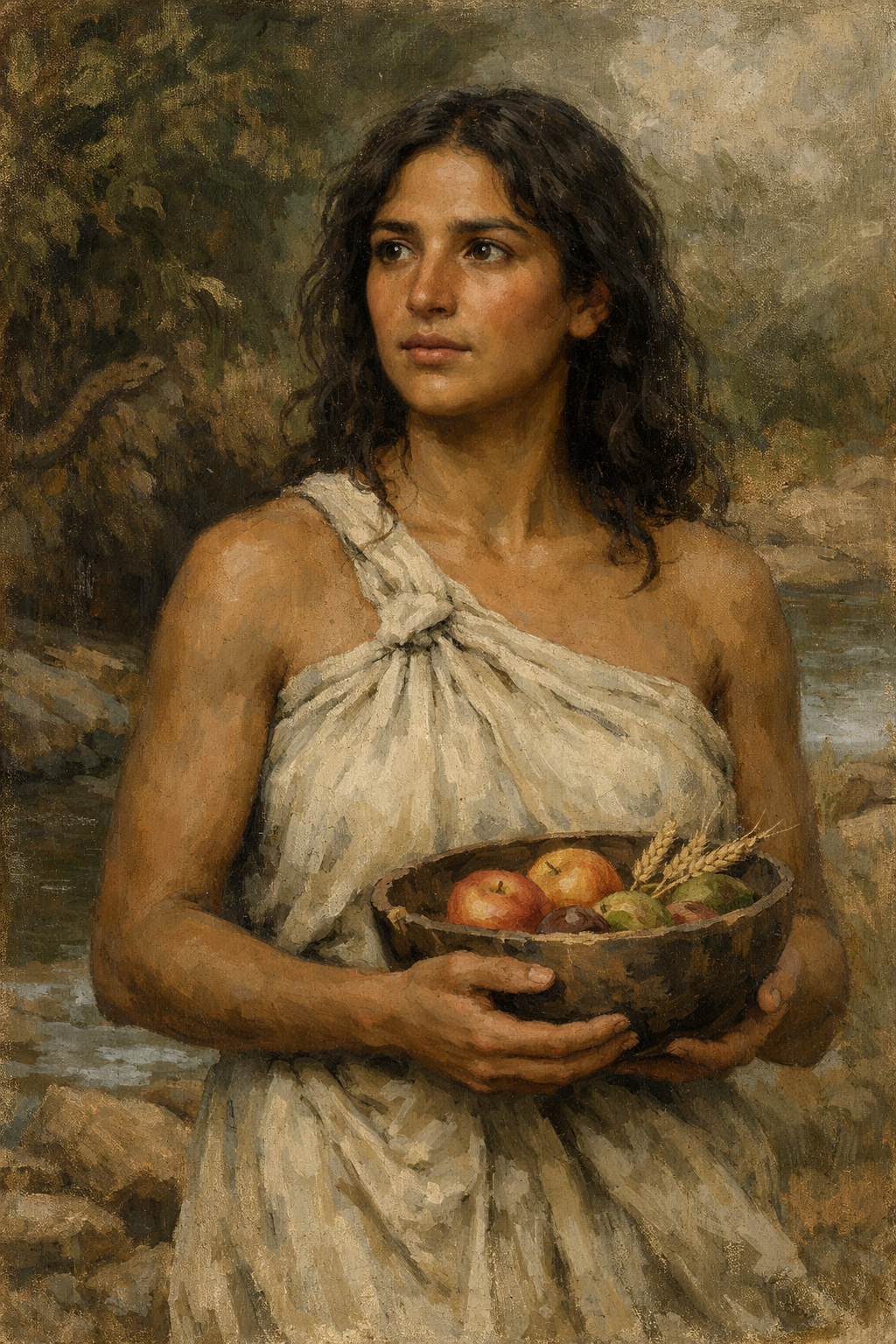
Eve’s Story
Eve enters the biblical story in Genesis 2, at a moment when the human world is still forming. God observes Adam, the first man, and names something incomplete in human life, saying plainly, “It is not good that the man should be alone; I will make him a helper fit for him” (Genesis 2:18). What follows is a deliberate act of creation. God causes Adam to fall into a deep sleep, takes one of his ribs, and closes the place with flesh. “And the rib that the Lord God had taken from the man he made into a woman and brought her to the man” (Genesis 2:21–22).
When Adam sees her, he speaks immediately: “This at last is bone of my bones and flesh of my flesh” (Genesis 2:23). Eve is recognized as fully human, made of the same substance, not as a separate or lesser being. Scripture then establishes her place in human life and family clearly: “Therefore a man shall leave his father and his mother and hold fast to his wife” (Genesis 2:24). Eve is Adam’s wife, and the two live together in the Garden of Eden.
The garden is a place God has planted, filled with trees that are “pleasant to the sight and good for food” (Genesis 2:9). Eve and Adam are placed there “to work it and keep it” (Genesis 2:15). They are given freedom to eat from every tree except one — the tree of the knowledge of good and evil. The command is specific and includes a consequence: “In the day that you eat of it you shall surely die” (Genesis 2:17). Eve’s early life unfolds in a world of provision, shared labor, and a single clear boundary. Genesis describes her condition without hesitation: “The man and his wife were both naked and were not ashamed” (Genesis 2:25). She lives without fear or concealment, with no need to protect herself.
In Genesis 3, Eve is approached by a serpent. He speaks directly to her and questions God’s instruction. Eve responds clearly, repeating the command she knows and naming its consequence: “God said, ‘You shall not eat of the fruit of the tree that is in the midst of the garden, neither shall you touch it, lest you die’” (Genesis 3:3). The serpent contradicts God’s warning. Eve then looks at the tree and weighs what she sees. Scripture records her reasoning directly: the tree is good for food, a delight to the eyes, and desirable for gaining wisdom. “So she took of its fruit and ate, and she also gave some to her husband who was with her, and he ate” (Genesis 3:6).
Immediately, awareness changes. “Then the eyes of both were opened, and they knew that they were naked” (Genesis 3:7). Eve and Adam sew fig leaves together and hide when they hear God walking in the garden. When God questions Eve, she answers without evasion: “The serpent deceived me, and I ate” (Genesis 3:13). She names the deception and claims responsibility for her action. Scripture records no argument or denial from her.
God then speaks consequences for the serpent, the woman, and the man (Genesis 3:14–19). In the midst of this, God speaks of future offspring and ongoing life. Afterward, Adam names his wife: “The man called his wife’s name Eve, because she was the mother of all living” (Genesis 3:20). This naming occurs after the disobedience and before they leave Eden. Eve’s identity is anchored not in what was lost, but in what will continue.
Outside the garden, Eve becomes a mother. “Now Adam knew Eve his wife, and she conceived and bore Cain” (Genesis 4:1). At Cain’s birth, Eve speaks with confidence and gratitude: “I have gotten a man with the help of the Lord.” She later gives birth to another son, Abel (Genesis 4:2). Cain becomes a worker of the ground, and Abel a keeper of sheep. Both bring offerings to God. Abel’s offering is regarded favorably; Cain’s is not.
Cain becomes angry and later kills Abel in a field. When God confronts Cain, Cain denies knowing where his brother is. God then pronounces consequences and sends Cain away (Genesis 4:8–12). Eve experiences grief that reshapes her life entirely. She becomes the first mother to lose a child to violence, and to live with the knowledge that one son has killed another.
Eve does not stop living.
After Abel’s death, “Adam knew his wife again, and she bore a son and called his name Seth” (Genesis 4:25). Eve explains the name herself, saying, “God has appointed for me another offspring instead of Abel, for Cain killed him.” She names death directly, and she also names restoration. Through Seth’s line, humanity continues.
Eve’s story does not include a recorded death or final words. Her last appearance comes within genealogical records that trace human generations back to Adam and Eve (Genesis 5:1–5). Scripture leaves her there — at the beginning of human history, identified by name, role, and lineage.
Who would she be today?
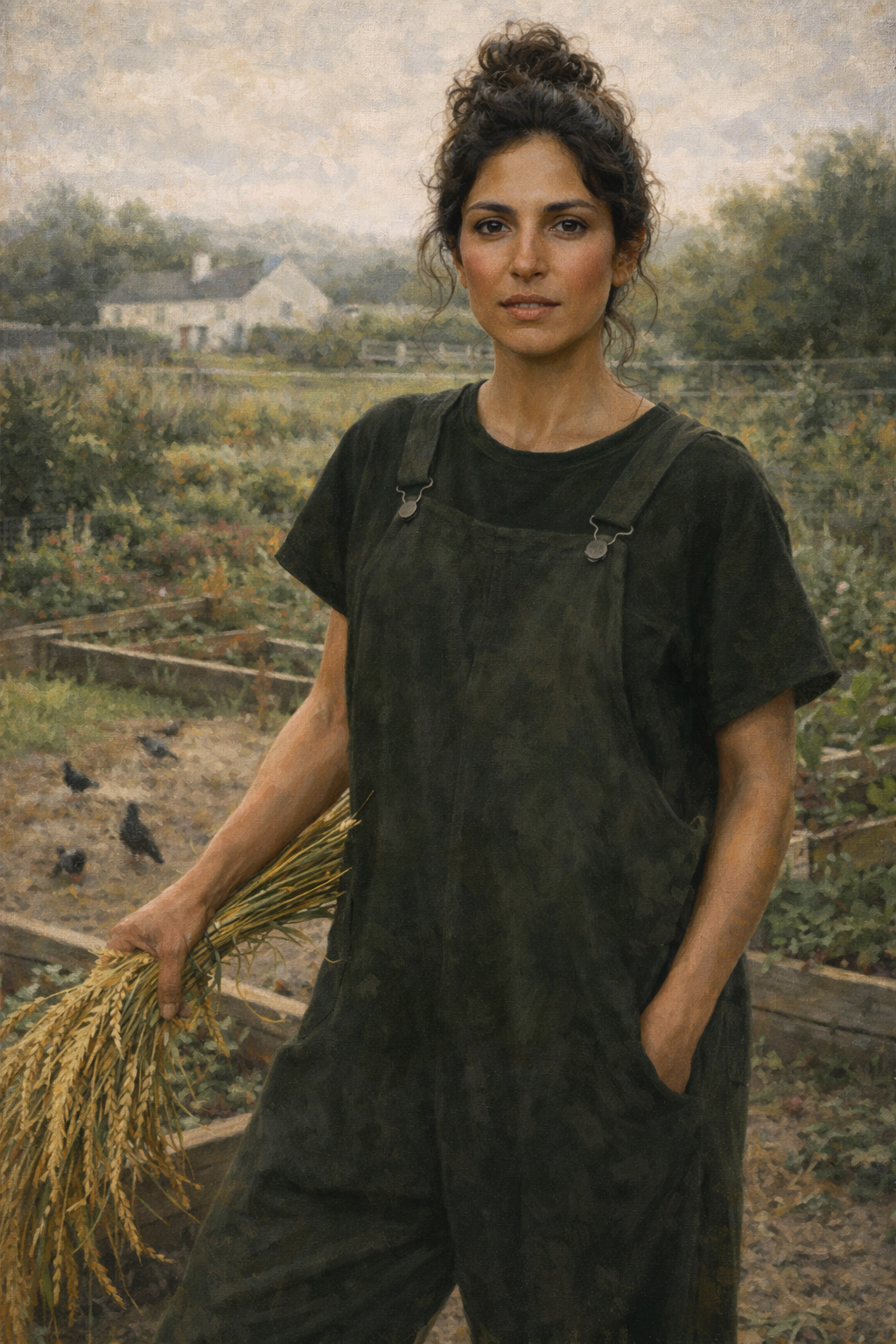
I think Eve would work the land. Scripture places her in a life of tending and cultivation from the beginning, and I imagine that knowledge staying with her. She would understand soil, seasons, and effort — not in theory, but through practice. She would know that growth requires attention and that loss is part of living things.
I think she would raise her family within that work. Her children would learn by watching her — how to persist, how to name loss honestly, and how to keep going after it. Eve’s strength has always been practical and steady. She notices, she names what is happening, and she continues to build life anyway.
Where Eve Appears in Scripture
Genesis 2:18–25
Eve’s creation from Adam’s rib, her recognition as fully human, and the establishment of marriage and shared life in the Garden of Eden.
Genesis 3:1–13
Eve’s conversation with the serpent, her decision to eat from the tree of the knowledge of good and evil, and her direct response to God when questioned.
Genesis 3:16–20
God speaks consequences for human life after disobedience, and Adam names his wife Eve, identifying her as “the mother of all living.”
Genesis 3:21–24
Eve leaves the Garden of Eden with Adam as human life begins outside its boundaries.
Genesis 4:1
Eve gives birth to Cain and speaks, acknowledging God’s help in bringing life into the world.
Genesis 4:2
Eve gives birth to Abel, and her sons’ different forms of work are introduced.
Genesis 4:8–12
Cain kills Abel; Eve is not speaking here, but this passage marks the first loss of a child within her family.
Genesis 4:25
Eve gives birth to Seth and names both her loss and restoration, explicitly referencing Abel’s death.
Genesis 5:1–5
Eve appears in the genealogy of humanity, named as Adam’s wife and the mother through whom generations continue.
References to Eve Outside Genesis
2 Corinthians 11:3
Eve is referenced as one who was deceived by the serpent, used by Paul as a warning about deception.
1 Timothy 2:13–14
Eve is referenced in a discussion of order and deception, reflecting later theological interpretation rather than narrative detail.
Legacy
Within Christian tradition, Eve has been spoken about in complex and often conflicting ways. She is remembered as the first woman to disobey God and is sometimes associated with the entrance of sin into the world — a reading that has, at times, placed disproportionate blame on her. At the same time, she is also honoured as “the mother of all living” (Genesis 3:20), a title that affirms her role in sustaining life after the fall, not before it. The good in Eve’s legacy is her honesty, her willingness to name what happened, and her refusal to disappear after failure and grief. The difficult and uncomfortable parts of her story lie in how it has been used historically — sometimes to justify mistrust of women, silence, or hierarchy — interpretations that go beyond what Genesis itself states. Many modern Christian readers and scholars now return to the text more carefully, noting that Eve speaks, reasons, names loss, and continues life, while Scripture itself never condemns her by name. Increasingly, Eve is understood not as a warning against women, but as a truthful picture of human responsibility, consequence, and endurance — the first person to learn that faithfulness includes living on after everything changes.
Reply